
Tourism in India: Why Every Global Journey Should Begin in India
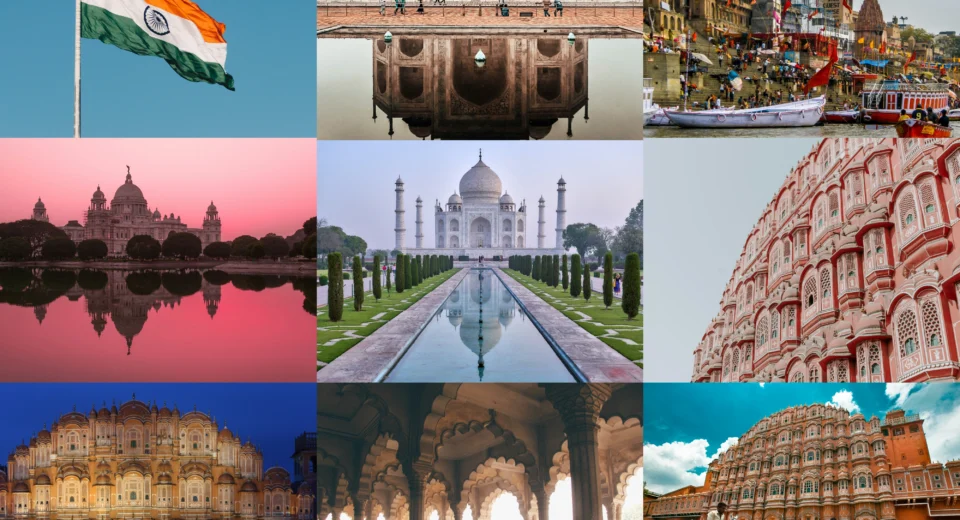
In 2026, travel has evolved. We are no longer just “tourists” ticking boxes; we are seekers looking for depth, authenticity, and connection. Tourism India is not merely a journey; it is a masterclass in the human experience. It is a “World in One Country” that prepares your senses, your mind, and your soul for everything else the planet has to offer. Here is why every global journey should begin in India is the ultimate starting point for your global odyssey-and why we are looking far beyond the Taj Mahal to find the nation’s true heartbeat. The “Masterclass” for the Global Explorer There is a common saying among veteran backpackers: If you can travel in India, you can travel anywhere. Starting your journey in India is like training for a marathon in high-altitude terrain. The sensory richness-the vibrant colors of a Rajasthani bazaar, the aromatic complexity of street food in Lucknow, and the organized chaos of Mumbai’s local trains-sharpens your instincts. By the time you reach the structured streets of London or Singapore, you’ll find yourself moving with a newfound confidence and adaptability. India doesn’t just host you; it teaches you how to navigate the world. Beyond the Marble: The Invincible Forts of Chhatrapati Shivaji Maharaj While the world often associates Indian architecture with the white marble of the Taj Mahal, the true spirit of the land is carved into the rugged, gravity-defying basalt of the Sahyadri Mountains. The Maratha Military Landscapes, recently inscribed as a UNESCO World Heritage Site in 2025, represent a completely different side of India: one of courage, visionary engineering, and defiance. These are not pleasure palaces; they are “Giri-durgas” (Hill Forts) that seem to grow out of the very cliffs they stand upon. Raigad Fort: Known as the “Gibraltar of the East,” this was the capital of Chhatrapati Shivaji Maharaj. Standing at its “Holiacha Mal,” you realize that this wasn’t just a military outpost-it was the heartbeat of a revolution. Shivneri & Rajgad: From the birthplace of the King at Shivneri to the “Royal Fort” of Rajgad, these structures utilized the natural topography so perfectly that they remained virtually unconquerable. Sindhudurg: A maritime marvel built on an island, where thousands of kilograms of lead were poured into the foundation to withstand the corrosive power of the Arabian Sea. To stand atop these forts is to understand the “invincible” Indian spirit. For the modern tourist, these forts offer the perfect blend of high-octane trekking and deep historical immersion. Engineering the Divine: The Living Temples In Europe, ancient cathedrals often feel like quiet museums. In India, a 1,000-year-old temple is a living, breathing ecosystem. These are sites where ancient science meets modern devotion. Starting your journey at a site like the Kailasa Temple in Ellora is a perspective-shifting experience. Carved vertically downward from a single massive rock, it is the world’s largest monolithic structure. Modern engineers still struggle to explain how 200,000 tonnes of stone were removed with such mathematical precision without a single structural crack. Further south, the Dravidian towers of the Meenakshi Temple in Madurai or the Brihadeeswarar Temple in Thanjavur serve as “City Centers.” They are masterpieces of acoustics, ventilation, and urban planning. When you witness a temple ritual that has remained unchanged for fifteen centuries, you realize that in India, time isn’t linear-it’s eternal. The Spiritual Foundation for “Internal Tourism” In 2026, the biggest trend in travel is Wellness and Mindfulness. Travelers are no longer just moving their bodies; they are trying to quiet their minds. India provides a spiritual grounding that no other destination can replicate. Whether it’s the transformative power of a sunset Ganga Aarti in Varanasi-the world’s oldest living city-or a silent meditation retreat in the foothills of Rishikesh, India offers the tools to center yourself. By starting your global journey here, you establish a “spiritual baseline.” You learn to find peace amidst the noise, a skill that will serve you whether you’re hiking the Andes or navigating the New York City subway. “Atithi Devo Bhava”: A Culture of Connection The greatest “amenity” India offers isn’t found in a 5-star hotel; it’s the philosophy of Atithi Devo Bhava– The Guest is God. In many global tourism hubs, the relationship between the local and the tourist has become transactional. In India, it remains personal. You will find it in the “Kirana” shop uncle who helps you find your way, the family that invites you for chai on a long train journey, and the warmth of a homestay in the mountains. This culture of hospitality makes India a safe and welcoming first step for those stepping out into the world. Sustainable and “Slow” Travel India is the original home of sustainable living. Long before “Farm-to-Table” was a marketing buzzword, it was simply how an Indian village functioned. In 2026, India is leading the way in Eco-Tourism, from the plastic-free initiatives in the Northeast to the solar-powered heritage stays in Rajasthan. Traveling through India teaches you the value of “Slow Travel”-the idea that the journey (the rickshaw ride, the street-side conversation, the local festival) is just as important as the destination. Conclusion: Your Journey Starts Here India is a land of contradictions that somehow make perfect sense. it is ancient yet cutting-edge; it is chaotic yet deeply peaceful. It challenges your preconceptions and rewards your curiosity. If you start your travel journey in India, you don’t just see a new place-you gain a new set of eyes. You learn to see beauty in the ruins, divinity in the stone, and a friend in every stranger. Once you have walked the ramparts of a Maratha fort and felt the energy of an ancient temple, you are truly ready to see the rest of the world. Are you ready to discover the heartbeat of the world? What’s Next on Tourism in India? Over the coming weeks, we will be diving deep into India’s most iconic cities, starting with the Maratha Heartland: Pune and the Sahyadri Forts.